Muscle Anatomy
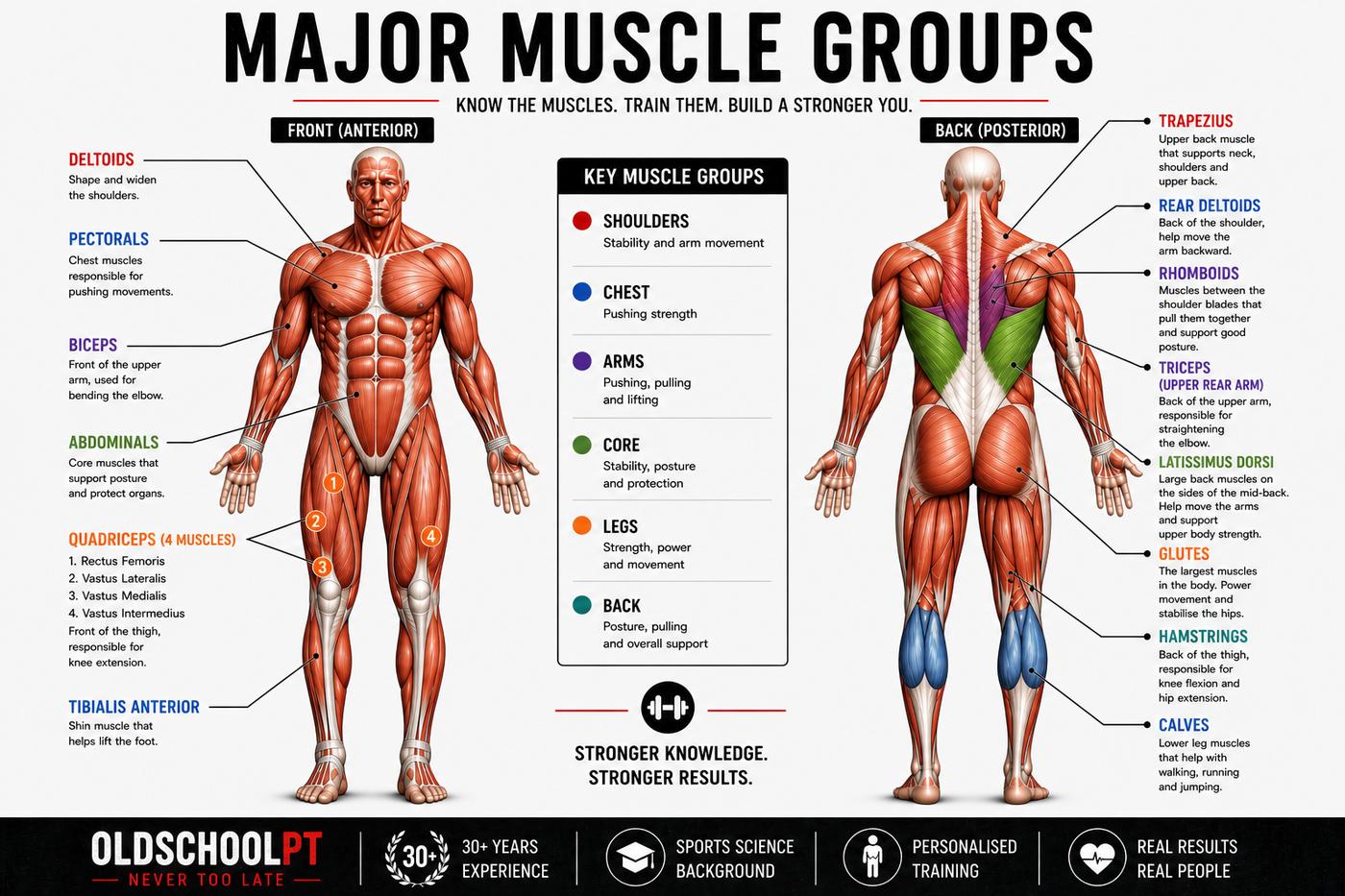
Know the muscles you are training. Select any muscle group below the diagram to learn what it does, what exercises target it, and why it matters for your training.
Understand the body before you train it
Most people train without knowing what muscles they are working. They follow programmes, copy others, and hope for results. Understanding the basics — what each muscle does and why it matters — changes everything. Train with purpose, not just effort.
The Five Components of Physical Fitness
The science behind what physical fitness really means — cardiovascular endurance, muscular strength, muscular endurance, flexibility and body composition explained in full.
Read More →The Five Systems — What Happens When You Train
Understanding what is happening inside the body during exercise changes the way you train. These five systems work together every time you lift, run, sprint or recover. Each page explains the science in plain English — what the system does, how training changes it, and what that means for you practically.
Cardiovascular
Heart rate, stroke volume, training zones and why fit people recover faster.
Respiratory
Why you gasp after a hard set, VO2 max explained, and how training teaches efficiency.
Muscular
Fibre types, why muscles grow, what DOMS actually means and how to use it.
Skeletal
Bone density, joint health, why the squat is the best thing you can do as you age.
Nervous
Why technique feels impossible at first and automatic later — and why fear before a heavy lift is normal.